
Sports Complex Fencing in San Bernardino County for field separation and spectator safety
Sports complexes encounter recurring damage when fencing lacks the structural capacity to handle ball impact, spectator lean, and equipment contact across multiple fields operating simultaneously. Frontgate Fence, Inc. installs sports complex fencing designed to separate playing surfaces, contain errant balls, and define spectator boundaries without creating blind spots that interfere with supervision or emergency access. Facilities in San Bernardino County need these systems when existing chain-link sags after repeated impacts, when multi-use fields require reconfiguration between seasons, or when liability concerns demand taller barriers between active play zones and parking or walking paths.
Installation accounts for ball trajectory patterns specific to each sport, with height variations that stop soccer balls at eight feet while baseball and softball fields require twelve-foot sections along foul lines and outfield perimeters. Posts are set deeper and spaced closer than standard residential fencing to handle the lateral force generated when balls strike mesh at high velocity, particularly in windy conditions that amplify panel flex and stress connection points over time.
Arrange an on-site evaluation to review field dimensions and identify areas where fencing height transitions affect sight lines or create gaps that compromise containment.
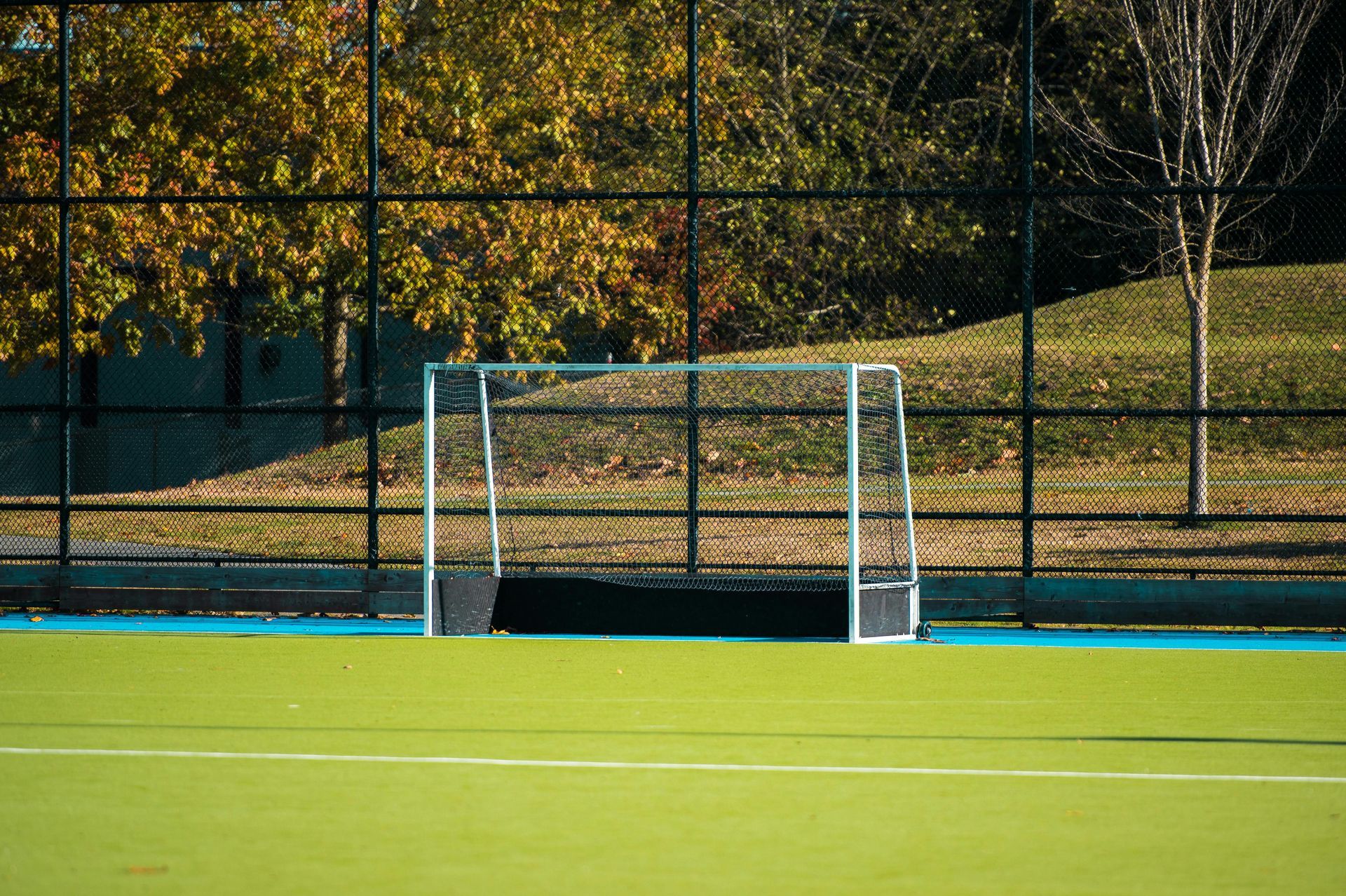
Once the system is operational, you notice balls stay within designated play areas instead of rolling into adjacent fields or parking zones, spectators remain behind defined boundaries without needing constant redirection, and maintenance crews access specific sections without removing entire fence runs. Frontgate Fence, Inc. configures gate placements that align with equipment storage needs and emergency vehicle routes required by facility insurance policies.
Projects include options for vinyl slat inserts that provide wind screening and sponsor banner attachment points, pad systems that cushion player contact along baseline fencing, and top rail reinforcement that prevents sagging in sections where mesh extends above eight feet. Color-coded sections help differentiate fields when multiple age groups or leagues share the complex during overlapping schedules.
What Proper Field Fencing Requires
The work involves anchoring corner and terminal posts in concrete footings sized to resist uplift and lean caused by mesh tension and repeated impact loading. Fabric gauge selection depends on whether the fence primarily contains lightweight balls like soccer or handles hardball impacts that can tear lighter-gauge materials, with nine-gauge chain-link specified for baseball and softball applications where eleven-gauge proves inadequate within two seasons of heavy use.
Answers to Frequent Facility Questions
Facility managers across San Bernardino County often need clarity on mesh durability under athletic use, gate configurations for equipment access, and how fencing integrates with existing dugouts or bleacher structures.
- What mesh gauge prevents tearing from repeated ball strikes? Nine-gauge galvanized chain-link withstands hardball and softball impacts without developing tears or requiring panel replacement mid-season, while lighter eleven-gauge options work for soccer or multi-purpose fields with lower impact forces.
- How does fencing handle equipment like field drags or mowers? Double-drive gates in twelve or sixteen-foot widths accommodate maintenance equipment and allow goal posts or bases to be moved between fields without disassembling fence sections each time configurations change.
- When should padding be added to baseline fencing? Facilities with fields positioned close to spectator areas or where baseline distances fall below standard dimensions benefit from foam padding covered in vinyl, which reduces injury risk when players slide or collide with fencing during play.
- What coating prevents rust in areas with irrigation overspray? Powder-coated galvanized steel resists corrosion in zones where sprinkler systems create constant moisture exposure along fence lines, a recurring issue in San Bernardino County complexes with automated irrigation running during overnight hours.
- How long does a typical multi-field installation take? Projects involving three to five fields complete in two to four weeks depending on post count and gate configurations, with work sequenced to leave at least one field operational throughout the installation period.
Frontgate Fence, Inc. coordinates installation timing with league schedules and tournament calendars to minimize disruptions. Contact our team to review your field layout and discuss mesh specifications matched to your specific sports and usage intensity.