
Commercial Security Fencing in Riverside for businesses protecting inventory, equipment, and restricted areas from unauthorized access
Unauthorized access to commercial property creates liability exposure, inventory loss, and operational disruption that affect profitability and insurance costs. Commercial security fencing addresses these risks by establishing physical barriers around equipment storage, inventory areas, and zones where public access creates safety or security concerns. Frontgate Fence, Inc. installs security fencing systems across Riverside businesses where asset protection, liability management, and regulatory compliance require documented physical security measures rather than signage alone.
The service involves assessing what needs protection, identifying how unauthorized access currently occurs, and selecting fencing materials that match the threat level without over-investing in security features that exceed actual risk. Options range from chain link for basic boundary control to steel for hardened protection, with gate configurations that balance security with operational access requirements.
Schedule a property walk-through to identify security vulnerabilities and review fencing options for your business.
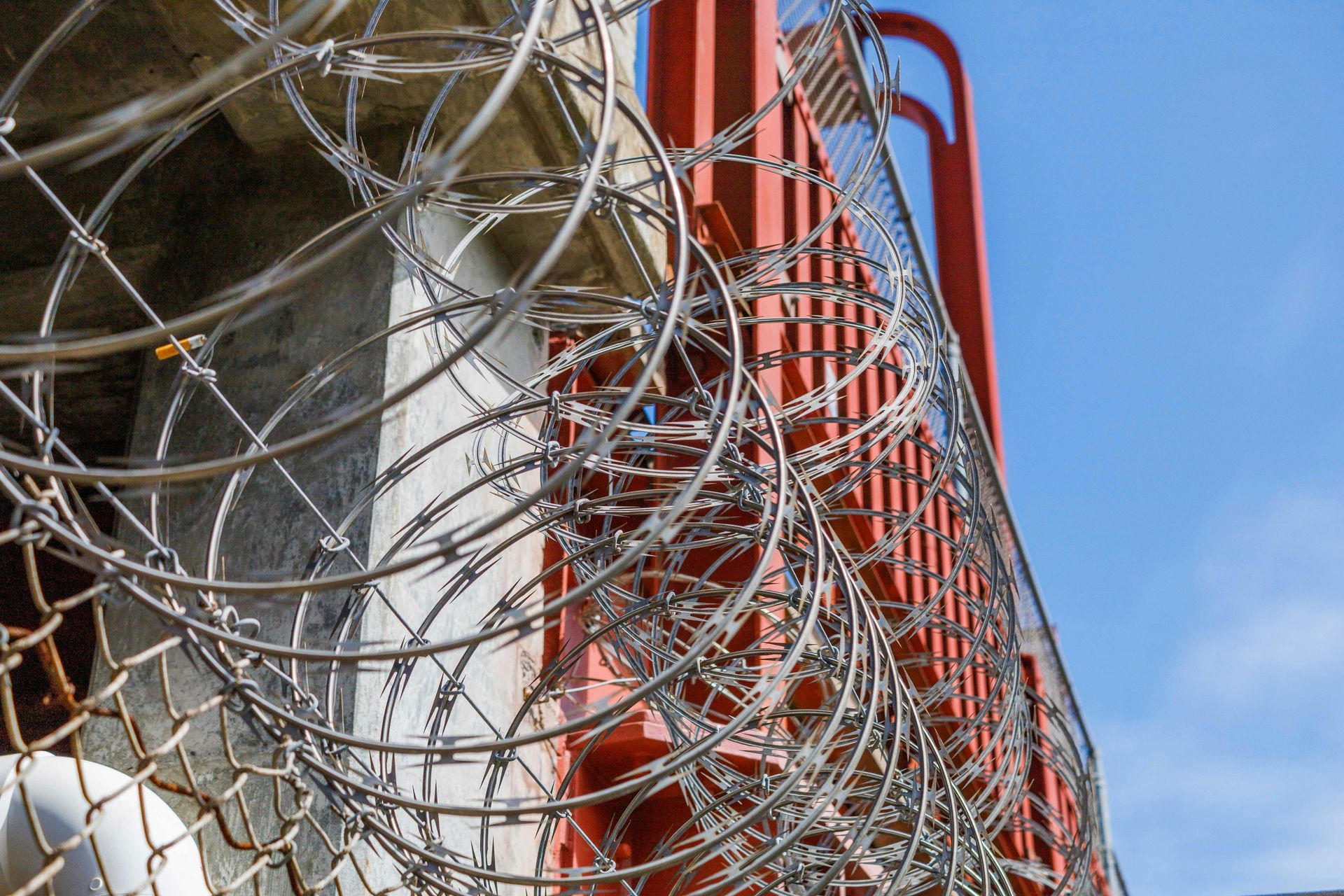
Once your security fencing is complete, inventory and equipment remain within defined, controlled areas rather than scattered across accessible property. You'll notice unauthorized personnel can no longer move freely through the site, and the documentation of physical security measures supports insurance claims and liability defenses when incidents occur. Gates create accountability by funneling access through monitored points, and the visible barrier signals that the property is actively managed rather than casually secured.
Customization depends on business type and what assets require protection: auto dealers use fencing with minimal visual obstruction to display inventory while preventing after-hours access, contractors need equipment yard fencing that accommodates material deliveries and tool storage, and retail properties require perimeter systems that separate customer areas from restricted loading and storage zones. The fencing integrates with existing security infrastructure like cameras and lighting, creating layered protection rather than relying on a single measure.
The Difference Between Boundary Marking and Security Fencing
Security fencing differs from simple boundary marking through material selection, height specifications, and features that resist climbing, cutting, or forced entry. Installation includes anti-climb measures like narrow picket spacing or topped barriers, gate hardware that resists tampering, and structural reinforcement at corners and access points where leverage attempts concentrate. In Riverside commercial districts where properties back to alleys or vacant lots, rear perimeter fencing often uses heavier gauge materials than street-facing sections because intrusion risk increases where visibility decreases.
What Property Owners Usually Ask
Security fencing decisions often involve understanding what level of protection actually matches business risk and what features provide real security value versus marketing claims.
- What determines the appropriate security level for commercial fencing? Assess what you're protecting, how portable or valuable it is, and what intrusion attempts have occurred previously. High-turnover inventory or easily transported equipment requires more robust fencing than bulk materials or permanently installed assets, and locations with documented theft patterns justify stronger measures than low-risk areas.
- How does fencing reduce liability for business property owners? Physical barriers with signage establish that entry is prohibited and that the property owner has taken reasonable steps to prevent unauthorized access. This documentation matters when injuries or criminal activity occur on your property, as it demonstrates security measures that courts and insurers recognize.
- Why do commercial properties need different fencing on different sides? Threat levels vary based on visibility, adjacent land use, and access patterns. Street-facing fencing may prioritize appearance and visibility while rear perimeters near alleys or vacant land emphasize intrusion resistance, allowing budget to focus on actual risk rather than applying uniform security measures where they aren't needed.
- What maintenance issues affect commercial security fencing in Riverside? Check gate operators and latches quarterly, as these components see heavy use and wear faster than fence fabric or panels. Inspect areas where landscaping equipment or vehicles make regular contact, as repeated impacts damage protective coatings and compromise structural integrity over time.
- When do insurance companies require upgraded fencing for commercial properties? Insurers may mandate fencing upgrades when claim history shows repeated theft or vandalism, when property use changes to include higher-value assets, or when underwriting audits identify inadequate perimeter security. Meeting these requirements can reduce premiums or prevent coverage denial.
Frontgate Fence, Inc. designs commercial security fencing based on asset protection needs and site-specific risk assessment rather than one-size-fits-all solutions. Request a security consultation to review fencing options that match your business requirements and budget parameters.