
Government Facility Fencing in San Bernardino County for controlled access and regulatory compliance
Perimeter security at government facilities demands fencing systems engineered to meet federal and state access control standards while accommodating public-facing operations that occur daily. Frontgate Fence, Inc. handles government facility fencing installations requiring anti-climb features, vehicle barrier integration, and audit-ready documentation that proves compliance with security directives specific to municipal buildings, county offices, and public works yards across San Bernardino County. Administrators request these upgrades when threat assessments identify perimeter vulnerabilities, when aging chain-link no longer meets current standards, or when facility expansions require extending secure zones without creating gaps in existing barrier systems.
The process begins with reviewing site-specific security plans and identifying clearance zones, camera coverage areas, and vehicle approach paths that influence fence placement and height requirements. Post spacing tightens to six feet on center in high-security zones, and panel attachments use tamper-resistant hardware that resists removal with standard tools, addressing vulnerabilities that allow unauthorized entry through loosened fence sections rather than over-the-top climbing attempts.
Request a security assessment to identify perimeter gaps and discuss panel specifications that align with your facility's threat level classification.
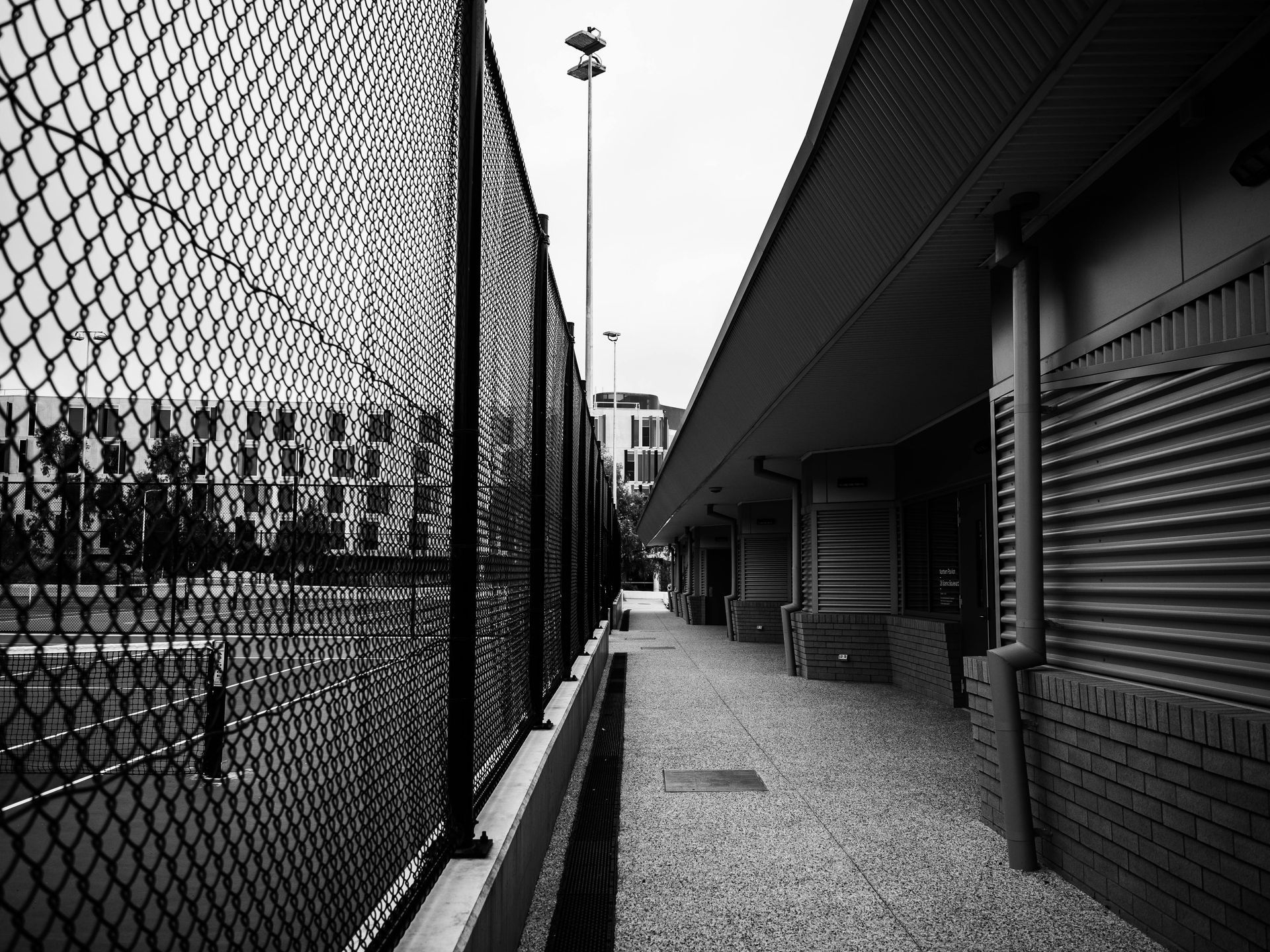
After completion, your facility shows defined secure zones with controlled entry points that funnel all personnel and visitors through monitored gates, vehicle barriers positioned to prevent ramming attacks on building perimeters, and sight lines maintained for security cameras covering fence approaches from multiple angles. Frontgate Fence, Inc. documents all materials and installation methods to support compliance audits required by government contracts and insurance policies covering public facilities.
The scope often includes bollard coordination where fencing terminates near vehicle access points, gate operators with card reader integration tied to existing access control systems, and color or finish matching that maintains architectural consistency with surrounding government buildings. Setback distances from property lines follow local codes while maintaining the standoff distance that prevents vehicle-borne threats from positioning too close to structures.
How Fencing Addresses Security Requirements
Government installations use welded wire mesh or ornamental steel rather than standard chain-link when regulations prohibit toe and finger holds, with panel designs that eliminate horizontal rails accessible from the exterior side. Anti-climb extensions add one to three feet of angled mesh at the top, creating an overhang that deters scaling attempts without requiring electrified components or constant monitoring by on-site personnel.
Common Questions About This Service
Facility administrators across San Bernardino County frequently need answers about compliance documentation, vehicle barrier coordination, and how fencing integrates with existing security infrastructure like cameras and motion sensors already monitoring the property.
- What documentation proves compliance with security standards? Installations include material certifications, engineer-stamped drawings when required by contract specifications, and photographic records showing post depths and concrete footing dimensions that satisfy audit requirements during facility inspections.
- How does fencing coordinate with vehicle barriers? Bollards and gate systems are positioned to create continuous barriers without gaps where vehicles could bypass fixed obstacles, with fence footings engineered to handle impact forces transmitted through interconnected sections during attempted breaches.
- When should anti-climb extensions be specified? Facilities classified as critical infrastructure or those storing sensitive materials benefit from angled extensions that add three feet of deterrent height without increasing the structural load that comes from raising the entire fence height across long perimeter runs.
- What materials resist cutting tools used in breach attempts? Welded wire mesh with heavy gauge steel and case-hardened coatings slows cutting attempts compared to twisted chain-link, which separates quickly when links are severed at a single point.
- How long does a perimeter upgrade take around an active facility? Phased installations allow sections to be completed while maintaining operations, with typical timelines ranging from four to eight weeks depending on linear footage and gate automation complexity required for the project.
Frontgate Fence, Inc. manages projects through bidding processes required for government contracts and coordinates with on-site security personnel to schedule work during periods that minimize operational disruptions. Schedule a consultation to review your facility's specific security directives and perimeter conditions.